
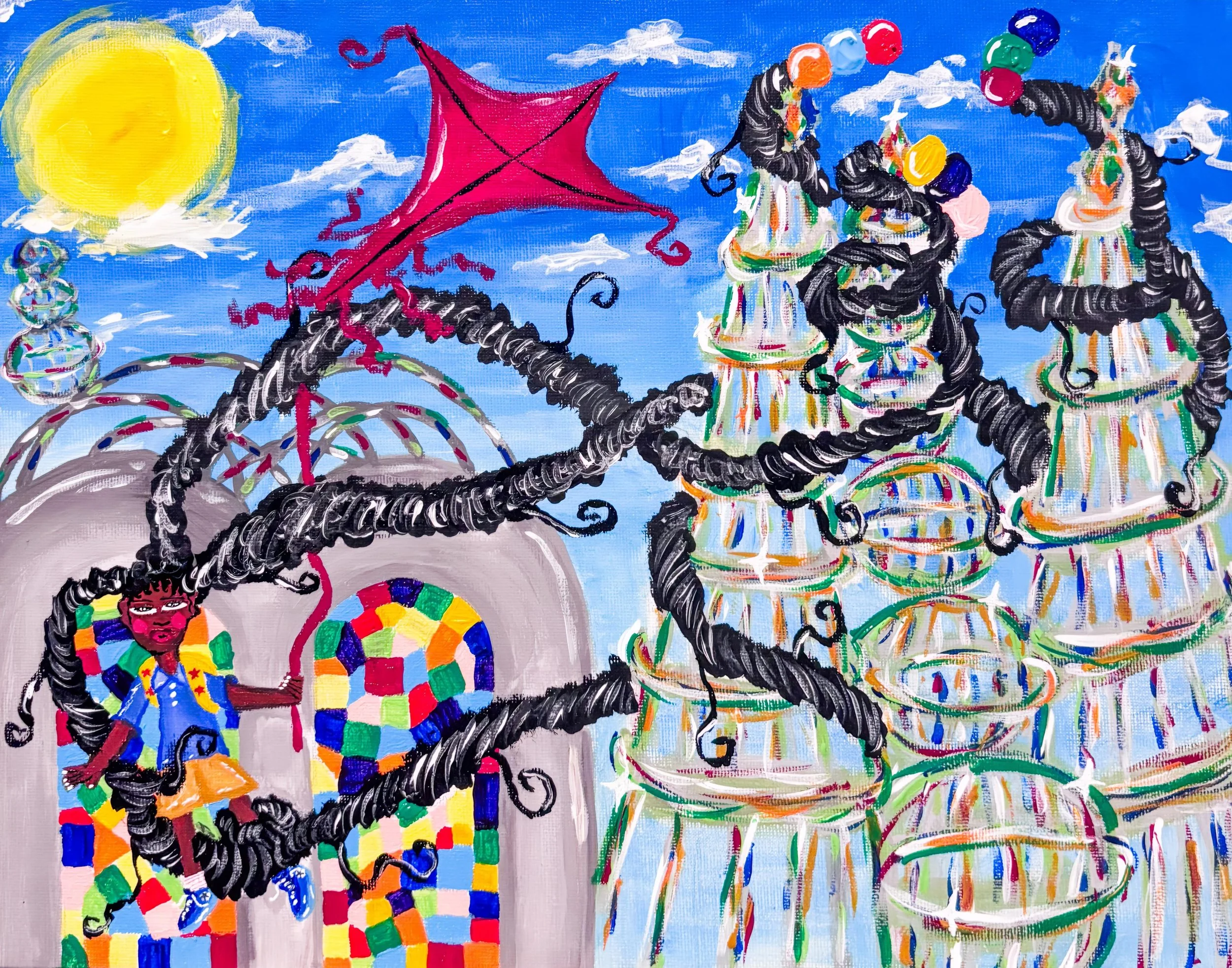
The Manifesto of Ghetto Fabulousness
Mainstream culture has historically used the phrase "ghetto fabulous" to dismiss working-class Black style as excessive or out of place.
This practice reclaims the term, defining it as a formal artistic framework and a deliberate strategy for cultural endurance. Ghetto Fabulousness sits at the sharp intersection of Black ancestral history and queer resourcefulness. It operates on the principle that a lack of conventional institutional art supplies is never a barrier to aesthetic excellence. Here, glamour is not superficial ornament; it is structural armor. By filtering authentic street style through a stylized, graphic visual language, the work creates an unapologetic shield that protects private history while celebrating collective survival.
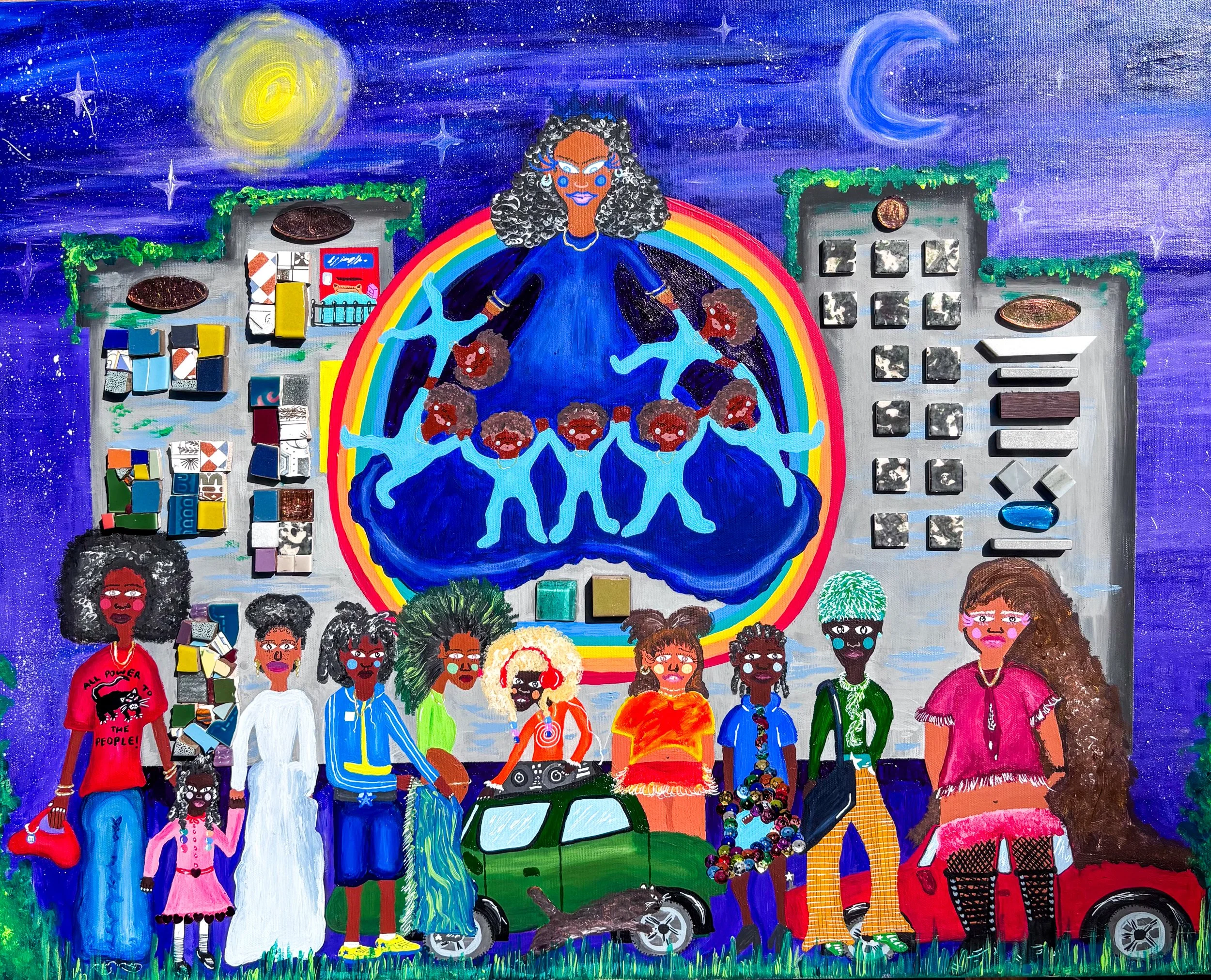
To understand the work is to understand the intent behind the mediums. This practice rejects standard institutional materials like marble and oil paint in favor of everyday found objects deeply connected to working-class life, governed by four absolute laws:
THE 4 LAWS OF MATERIAL RESOURCEFULNESS
1. The Law of the Everyday Artifact
We elevate the domestic and everyday items routinely ignored or discarded by traditional fine art institutions—childhood plastic couch covers, organic human hair, jars of hair barrettes, charms, vintage dominoes, and domestic tile. We treat these items not as junk, but as sacred historical artifacts heavily embedded with our community’s deep DNA.
2. The Law of the Pin & Magnet
We do not create static, untouchable representations of history. We weaponize silver safety pins, heavy-duty staples, and hidden magnetic fields to physically bind primary historical data—like 1800s slavery registries, Civil War pension files, and California eviction notices—straight to the canvas. The hardware doubles as a structural fastener and a tool of raw, un-cropped preservation.
3. The Law of the Conditional Invitation
The Law of the Conditional Invitation rejects passive observation by using materials as boundary layers that dictate strict terms of engagement for the audience. Through a combination of visual barriers and tactile, interactive elements, the artwork controls how personal history is consumed by the outside world.4. The Law of Material Glamour
Sequins, charms, gems, and bold 2D graphic animation lines function as visual shields. The practice explicitly rejects the institutional requirement that Black art must solely showcase unrefined pain. Glitter and high-energy style are used to actively reframe trauma into a testament of resilience and radical joy.This studio practice sits in conscious, direct conversation with radical historical movements and the material archivists who disrupted the art world before us:
Arte Povera: Continuing the late-1960s tradition of rejecting luxury art mediums to create monumental work out of ordinary, discarded materials.
The Black Arts Movement: Grounding the creative practice in the community's lived truths, ancestral memory-making, and self-determination.
The Legacy of Assemblage: Walking firmly in the lineage of artists like Betye Saar, who layered vintage family photos and spiritual domestic objects; David Hammons, who embedded human hair from Black barbershops into fine art; and Thornton Dial, who used discarded wire and scrap items to tell unyielding stories of survival.
HISTORICAL CONTEXT
Practice in action
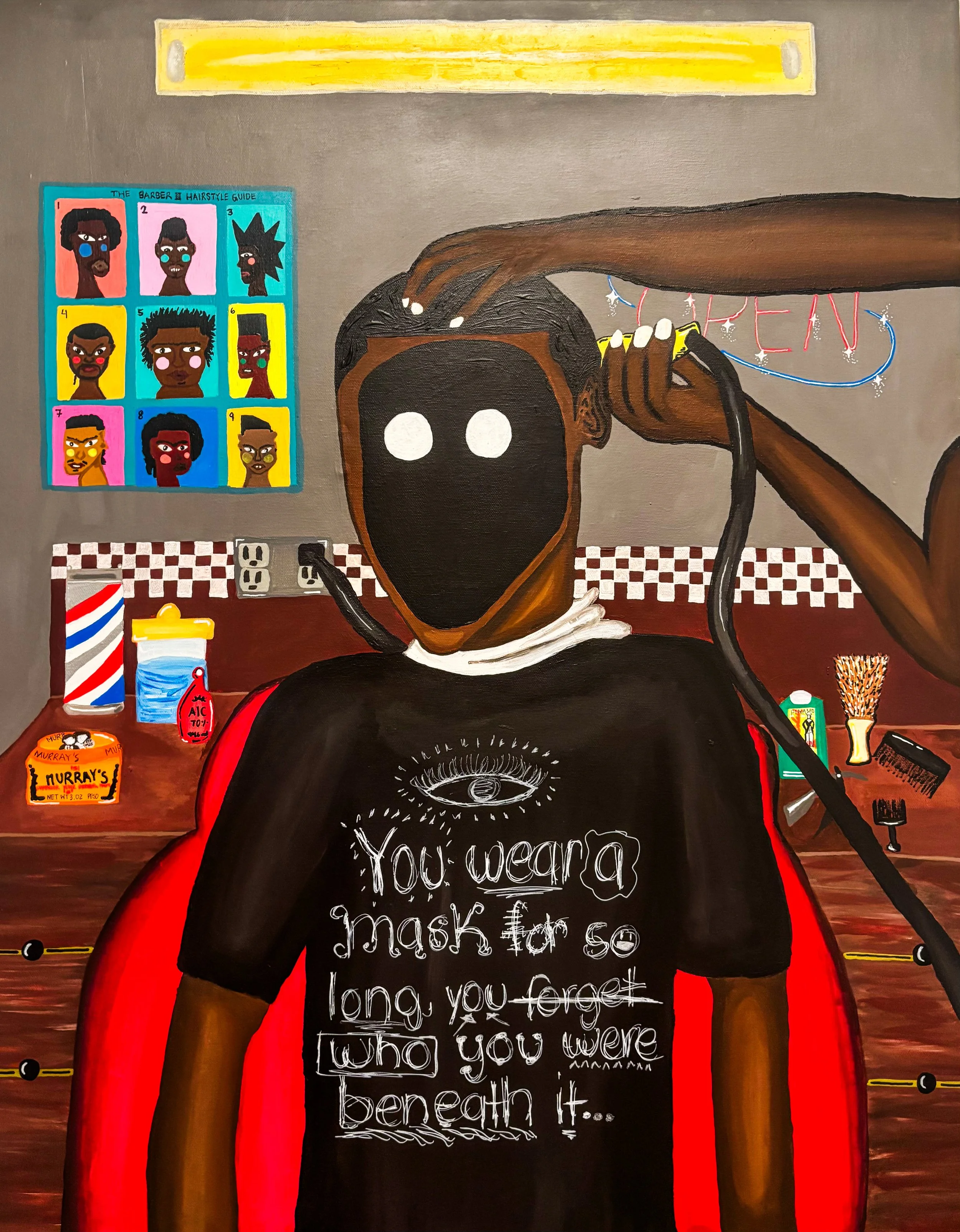
"You Wear A Mask For So Long, You Forget Who You Were Beneath It" 24 x 30 in. Acrylic & Oil Pastel with Magnetic Elements 01/20/25
A sharp commentary on the exhausting survival tactics used to navigate rigid spaces of masculinity. A Black boy with a hollowed, ghost-like face sits in a traditional barbershop chair—a cultural hub that can shift from a sanctuary into a site of hyper-vigilance for queer individuals. Utilizing a hidden magnetic field behind the canvas fabric, viewers are invited to physically swap and handle different emotional faces on the figure, transforming a vulnerable critique of psychological masking into a tactile, interactive tool of raw narrative preservation.
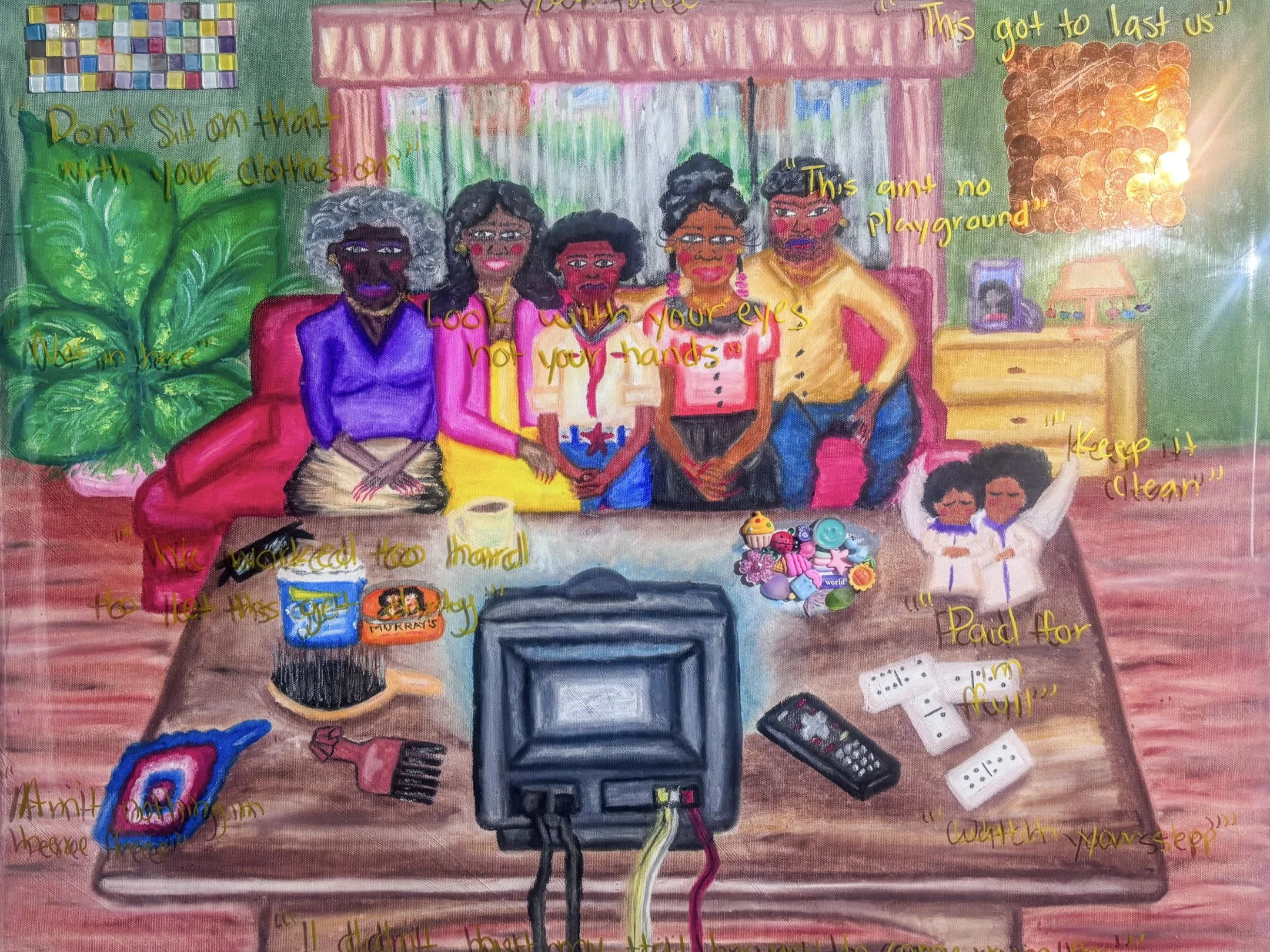
“A Witness, Not a Guest” 24 x 30in. Oil pastel, mini tiles, sequins, charms, clear vinyl, and heavy-duty staples 07/13/26
A love letter to the sanctuary of the Black domestic space, framing childhood plastic couch covers as material armor. The canvas is wrapped in heavy clear vinyl and secured with industrial staples to honor the labor of working-class mothers and domestic workers. Across the plastic shield, Posca marker warnings like "Don't sit on that with your outside clothes" cast physical text shadows onto the artwork beneath. Executing the Law of the Conditional Invitation, the vinyl functions as a visual deadbolt—permitting the world to observe the culture's interior warmth from a distance, while keeping the sacred internal movements of the home protected from the outside gaze.
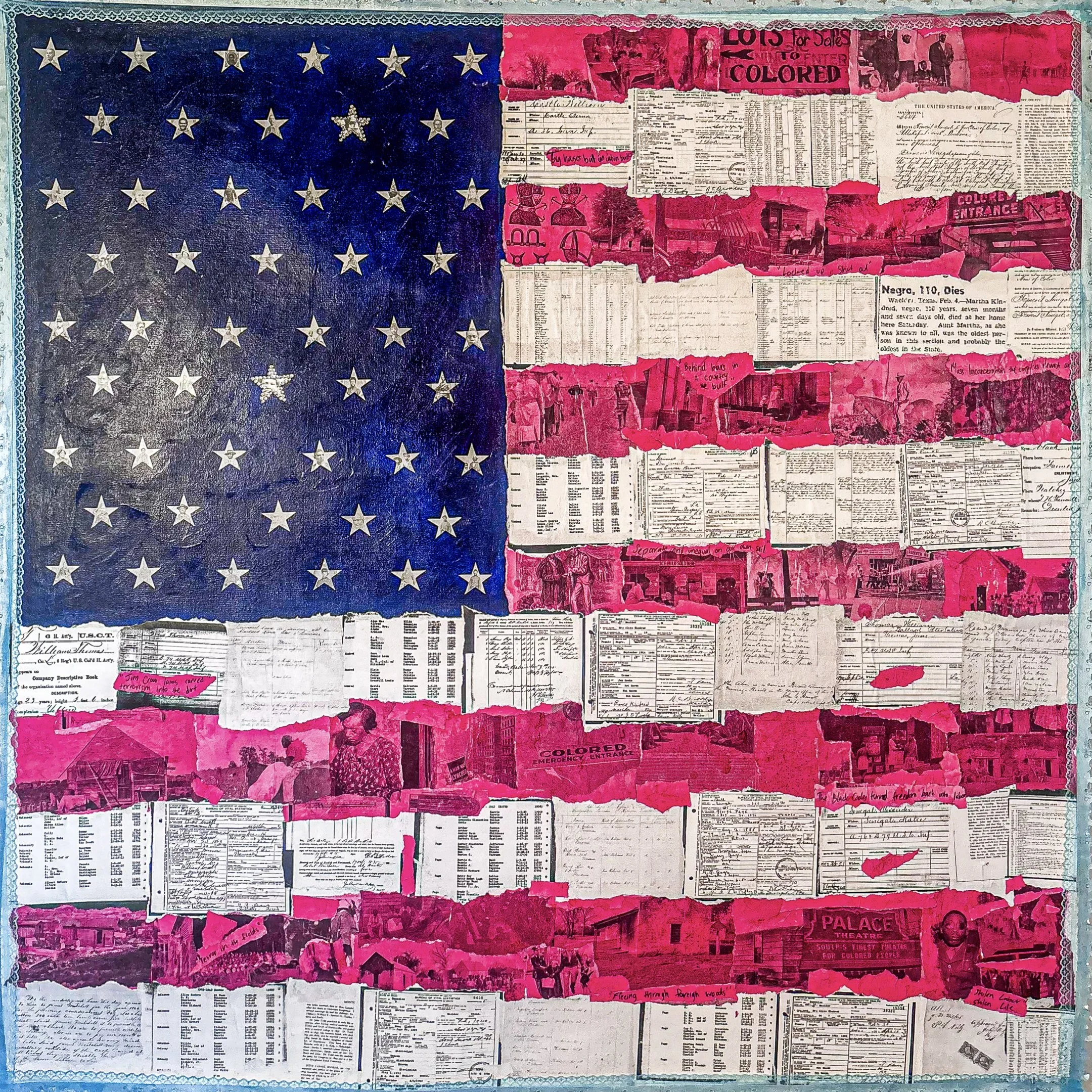
"A Flag Paid in Full" 52 x 49 in. Mix Media Collage 07/04/26
Named after the iconic film, this monument surfaces the physical receipts proving Black families paid for this country in full. Built on cotton canvas to confront historical labor exploitation, the piece transforms a symbol of state power into a textured family ledger. Tintype photos of the artist's 3rd great-grandparents, Elias Cassel and Mary E. Jackson, serve as the flag’s stars, while raw, un-cropped family freedom papers, slave records, and Union Civil War pension files form its white stripes. It stands as a brilliant, unyielding material clash between deep ancestral history and a refusal to let the archive be erased.